
High-Performance Liquid Chromatography (HPLC) is one of the most powerful and widely used analytical techniques for the separation, identification, and quantification of compounds in complex samples. Thanks to its high sensitivity, accuracy, and versatility, HPLC is an essential tool in pharmaceutical, clinical, food, environmental, and biotechnology laboratories.
What Is HPLC?
High-Performance Liquid Chromatography (HPLC) is a chromatographic technique that separates components of a mixture based on their interactions with a stationary phase and a liquid mobile phase under high pressure. It allows precise qualitative and quantitative analysis of molecules such as drugs, proteins, peptides, metabolites, and contaminants. Learn more
HPLC is preferred when high resolution, reproducibility, and reliability are required for analytical testing.

Principle of HPLC
The principle of HPLC is based on differential partitioning of analytes between:
A stationary phase packed inside a chromatographic column
A mobile phase (liquid solvent) that carries the sample through the column
As the sample flows through the column under high pressure, each compound interacts differently with the stationary phase, resulting in different retention times. These differences allow efficient separation and accurate identification of each component.

Main Components of an HPLC System
An HPLC system consists of several essential parts that work together to ensure precise analysis:
Pump: Delivers the mobile phase at a constant and controlled flow rate
Injector: Introduces the sample into the system
Column: Contains the stationary phase where separation occurs
Detector: Identifies and quantifies separated compounds
Data System: Records chromatograms and analyzes results
Each component plays a critical role in achieving high-quality chromatographic performance.

Types of HPLC Techniques
Reverse Phase HPLC (RP-HPLC)
The most commonly used HPLC mode. It employs a non-polar stationary phase (C18, C8) and a polar mobile phase. Ideal for pharmaceutical and biological compounds. Read more

Normal Phase HPLC
Uses a polar stationary phase and non-polar mobile phase. Suitable for separating polar compounds. Read more

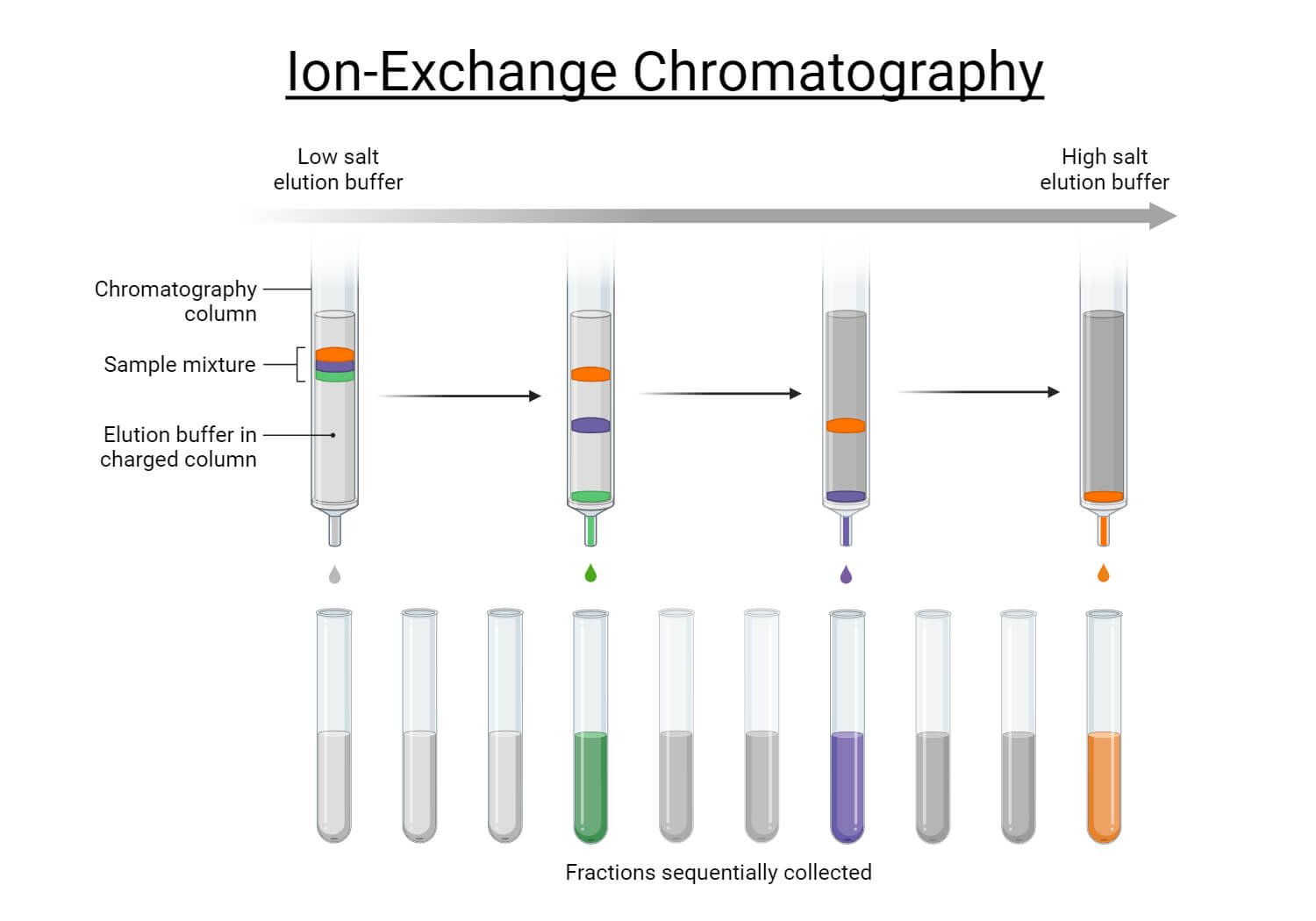
Ion-Exchange HPLC
Separates analytes based on charge differences. Widely used for proteins, amino acids, and nucleic acids. Read more
Size Exclusion Chromatography (SEC)
Separates molecules based on molecular size. Common in protein and polymer analysis. Read more

Affinity Chromatography
Highly specific separation based on biological interactions such as antigen-antibody binding. Read more

HPLC Detectors Explained
Choosing the right detector is crucial for accurate analysis:
UV-Visible Detector: Most common; suitable for compounds with chromophores
Photodiode Array (PDA): Provides spectral information for peak identification
Fluorescence Detector: Highly sensitive for fluorescent compounds
Refractive Index (RI) Detector: Used for compounds without UV absorption
Mass Spectrometry (LC-MS): Offers high sensitivity and structural identification
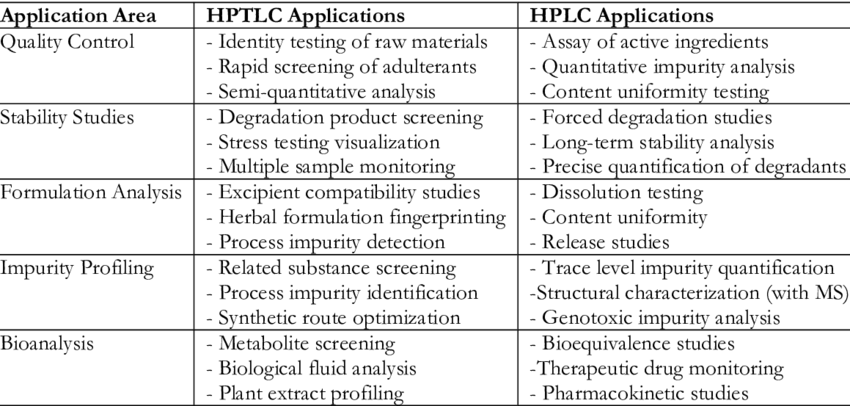
Applications of HPLC
HPLC is widely applied across multiple scientific and industrial fields:
Pharmaceutical Industry: Drug development, quality control, stability testing
Clinical Diagnostics: Biomarker and metabolite analysis
Food & Beverage: Detection of additives, contaminants, and residues
Environmental Analysis: Monitoring pollutants and toxins
Biotechnology & Reproductive Biology: Protein purification, metabolite profiling, PMA research

Advantages of HPLC
High resolution and sensitivity
Excellent reproducibility and accuracy
Ability to analyze complex mixtures
Wide range of detectors and applications
Suitable for thermally unstable compounds
These advantages make HPLC a gold-standard technique in analytical laboratories.
| Technique | Best For | Key Feature |
| HPLC | Non-volatile and thermolabile compounds | Versatility |
| GC | Volatile compounds | High efficiency |
| LC-MS | Trace analysis and structure identification | Ultra-high sensitivity |
Frequently Asked Questions (FAQ)
What is HPLC used for?
HPLC is used to separate, identify, and quantify compounds in pharmaceuticals, biological samples, food, and environmental matrices.
Why is reverse-phase HPLC the most common?
RP-HPLC offers excellent resolution, reproducibility, and compatibility with a wide range of samples.
What is the difference between HPLC and UHPLC?
UHPLC uses smaller particle columns and higher pressures, providing faster analysis and higher resolution than conventional HPLC.
Conclusion
High-Performance Liquid Chromatography (HPLC) is an indispensable analytical technique that combines precision, sensitivity, and versatility. Whether in pharmaceutical quality control, clinical diagnostics, or advanced biotechnology research, HPLC continues to play a central role in modern analytical science.
Explore high-quality HPLC columns, solvents, and reagents to achieve reliable and reproducible results in your laboratory.